
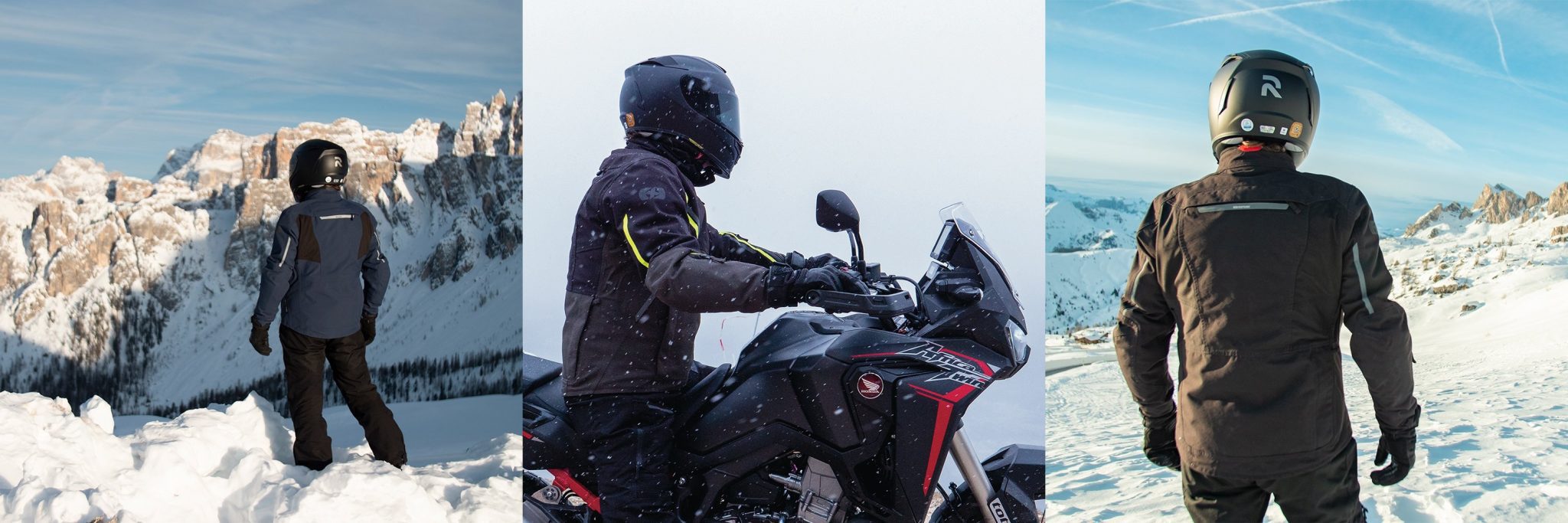
Who says winter is the time to hibernate and put away your pride and joy? We see plenty of riders take to the road and track during our cold and sometimes harsh winter months. Strap on your helmet and rev up your engine, because we at BDLA Motorbikes are about to show you how to turn the chilly season into your own personal playground. Get ready for a winter riding experience like never before. We’ve also hand selected a few items within our range that reflect the areas spoken about to tackle the winter comfortably, keep an eye out!
Layer Like A Pro
I always chuckle to myself, but a wise soul once told me that us riders are like onions. We should have many layers to ourselves, and before we get too deep, we are only talking about your riding gear! We always like to talk about a “3-layer system”. Base layer, mid layer and an outer layer. You want to make sure your base layer during the winter is thermal (think Merino Wool). We also advise that you stick to moisture wicking properties too, as we do tend to sweat even in the cold, and it’s not very pleasant to your skin (or in my case my nose too!).
Your mid layer should follow very much the same principles as your base layer, only this should be worn over your regular t-shirt and at most a thin jumper. Motorcycle mid-layers have been designed to keep heat in, and as a result keep you much warmer. They are surprisingly thing, but extremely effective at trapping heat and your natural body warmth. So much so that all of us not only wear them on our bike, but I have started wearing mine round the house to keep the heating bill down.
Finally, we recommend wearing an outer layer when the weather takes a real turn for the worse. Unfortunately, in our wonderful country that can be often. In this case we would recommend a windproof and waterproof outer layer, that is separate from your motorbike jacket and trousers (more on riding jacket and trousers later). This is because when you arrive at your destination, your motorbike clothing will not be wet through apart from your outer layer. This allows you to get back on the road after a small drink break and a breather without too much discomfort.
Gear Up For The Arctic
Fail to plan, plan to fail. That’s what my school teacher always used to tell me, and even I’ll admit they were right in this case. As our winters seem to one up themselves every year, a suitable riding jacket and pair of trousers is almost unavoidable during winter. Luckily for us however, clothing manufacturers are upping their game too. From drop liners to laminates, entry-level to top tier touring, there is going to be a set that will keep you warm, dry and comfortable while riding. Ensure that the clothing comes with a removable thermal liner, that it’s waterproof, and finally that they have a ventilation system too. You’ll be able to wear these through the peak winter, but they also make excellent companions through the spring and autumn seasons.
I’ve added a few favourites of ours below at different prices depending on your budget, which will no doubt keep you on the road in comfort. Matching trousers are also available.
Your Extremities Are Your Worst Enemy
Cold hands and feet are so last season. Insulated gloves and socks offer a toasty alternative to our summer wear. Adding an inner glove to your already thermal lined gloves are a sure-fire way to not feel the cold. You can also go on step further and add in a waterproof and windproof over mitt, which act in the same way that your waterproofs do for the rest of your clothing. Thermal socks are an actual god send, and when you wear a well fitted waterproof motorbike boot. When you tackle both your hands and feet, you will successfully allow your body to use less energy to keep your core warm, and as a result you’ll feel downright toasty compared to when you ride without mitts and thermal socks.
Is Heated Gear Worth It?
Imagine having a personal space heater while you ride. It is worth it. The only downside is to fully equip yourself out in heated gear it can prove to be quite an expensive ordeal. If you have the budget, it’s truly fantastic. We would recommend wearing heated gear which can be plugged into your bike’s battery though, as you could otherwise run into a potential downside of running out of juice on a longer journey.
Balaclavas & Neck Tubes: The Winter Warriors Secret Weapon
It is not just a cool catch phrase. Well, OK it is, but it’s true! A well-made and fit thermal balaclava can make a world of difference. Depending on your riding position, the gap between your helmet and your jacket collar will be exposed from time to time, and to keep Jack Frost from grinning ear to ear, wrap a balaclava around yourself.
Hand guards & Handlebar Muffs: Your Winter BFFs.
Handguard and muffs might not be to everybody’s taste, but they are excellent during winter riding. Riding muffs are a genuine game changer, as most come now equipped with a windproof and waterproof membrane, keeping both windchill and the rain away from your mitts. You will see plenty of delivery riders bring your favourite takeaway to you on a Friday night equipped with these, and now you certainly know why. You can elevate this still when you pair them with a pair of heated grips. We deal with a brand now who even design them to work in tandem and keep your hands dry and in most cases rather toasty.
Pit Stops Are Essential
We do hate spending time away from our bike, however if you are out in the wind, rain and cold, a quick coffee break can make or break your journey. We all need a recharge, no matter how hardened you are as a rider. Besides, who does not love a quick coffee and a bite to eat.
Strike A Pose.
This might sound a little odd when you say it out loud, and it can be bike dependent, but strike a pose! By that, we mean tuck in your elbows and knees. Most riders find comfort by taking a naturally wider riding position, however in the cold that just increases your surface area and invites cold air to your body. Cut through the wind like a pro and keep the warmth locked in.
Weather Wizardry.
I might have over done the wizardry on this one, but simply put keep an eye out for the weather. If you are on a touring trip with 100 miles to your hotel, but you have 7 hours to get there, check the forecast. Chances are the torrential rain or cold will alleviate at some point during the day. Why put yourself through unnecessary hardships? Steer clear of dicey conditions and opt for the clear and cozy route.
To conclude, I could waffle on all day on how to stay warm, and for good reason. We know however that as you start to take on some of the advice above, you will start to enjoy winter riding more and ride with a smile on your face. Is there any more you can realistically ask for? Of course there is, equip yourself in some of the gear below and you’ll tackle the winter months effortlessly.