

Unfortunately, we live in a world where your pride and joy isn’t as safe as we like to think it is. If you’ve been riding for a while, you’ll most likely have heard of a riding friend, and if not directly yourself may have unfortunately been impacted by a bike thief. Every year thousands of motorcycles are stolen. Unbelievably, more than half of all bike owners neglect to use any form of security!
Official police data by the Motorcycle Industry Association (MCIA) has shown a 7.9% drop in motorbike thefts across the UK (2024 vs 2023) and it’s continuing to decline. This is down to industry efforts like the MCIA Secured program and increased public awareness. Although thieves remain active and recoveries are dropping, so it is important to take the necessary steps to give your bike it’s best chance of staying home.
Below, we at BDLA Motorbikes will provide practical tips and advice that can help you protect your bike, as well as the most common theft methods to be on the lookout for.
COMMON MOTORCYCLE THEFT METHODS
Key Cloning & Electrical Theft
Modern motorcycles with electronic immobilisers are increasingly targeted through key cloning. Thieves use specialised electronic devices to intercept or duplicate the signal from your key fob. This can allow them them to start the bike and simply ride away. This motorbike theft method is fast, quiet, and leaves little evidence. It’s especially common with with high-value bikes.
Bolt Cutters
Traditional but still widely used, bolt cutters remain effective against low-quality security chains, locks and other security solutions. Thieves often target bikes secured with lightweight or budget locks, breaking them in just a few seconds. Even mid-range chains can fall victim to large, high-leverage bolt croppers wielded by experienced criminals.
Angle Grinders
Angle grinders are unfortunately now one of the most common tools used in motorcycle theft. Battery-powered grinders can cut through most locks and chains within minutes. Low quality security will be dismantled often much faster. Although loud and spark-heavy, thieves operate with shocking confidence knowing that bystanders rarely intervene. Only high-security, grinder-resistant locks offer meaningful protection against this method.
Hammers & Blunt Force Tools
Hammers and similar blunt tools are utilised by thieves to smash cheaper disc locks, padlocks, steering locks or ignition barrels. Repeated heavy blows can fracture low-quality metal components or force locks open, especially those not designed for impact resistance.
Leverage & Pry Attacks
Motorbike thieves are known to use long bars, scaffolding poles or even parts of the bike itself to succeed. They simply apply leverage to force open low quality chains, padlocks or ground anchors. This method specifically exploits weak lock designs or poor locking positions that allow space for prying.
Van Lifting (Lift and Load)
In some cases thieves avoid locks and don’t attack them at all. Instead, thieves physically lift the motorcycle into a van within seconds. This method is especially common when bikes are left unsecured or only protected with lightweight locks that don’t anchor the bike to the ground. This is a really common form of theft when bikes aren’t at home with their full security suite.
BASIC MOTORCYCLE SECURITY MEASURES
The good news, is that we have a multitude of options to help prevent theft, and provide effective deterrents against thieves. Our advice here is to use as many of the options below which is realistically possible for your current riding. At it’s core, your home setup should include a motorcycle chain & lock, alongside a ground anchor. We also recommend that while out and about the minimum you use is a disc lock, but if possible use a smaller motorcycle chain. This is because it forces thieves to physically break your chain, as opposed to simply lifting your bike.
Security Chains & Locks
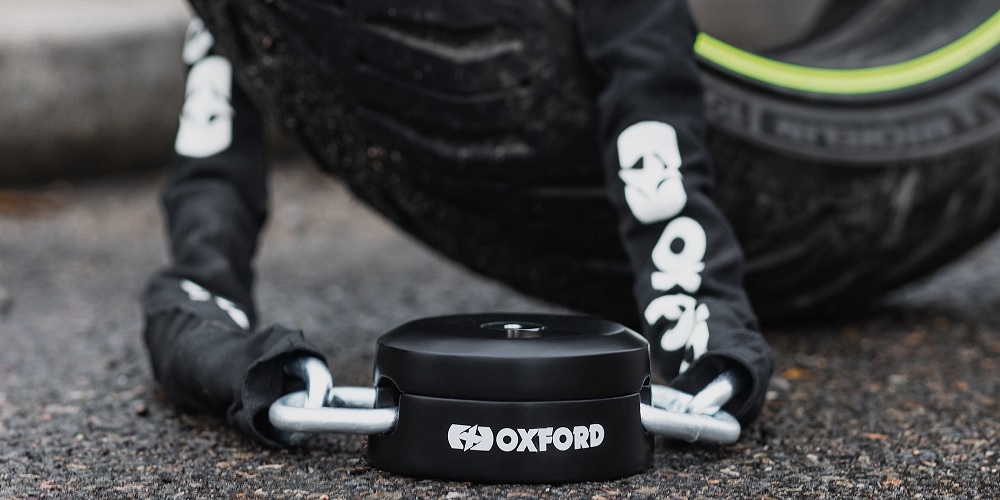
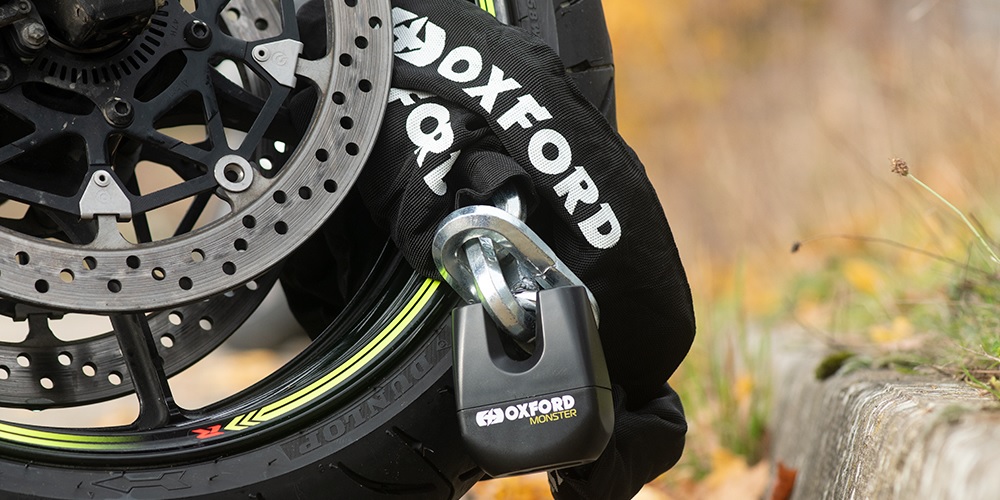
Heavy-duty motorcycle security chains remain one of the strongest defences against theft. Made from hardened steel and often paired with robust padlocks, a quality chain can withstand bolt cutters and significantly slow down angle-grinder attacks. They’re most effective when used to secure your bike to an immovable object. Best used at all times, however it’s essential for home and work if you’re a commuter.
Disc Locks
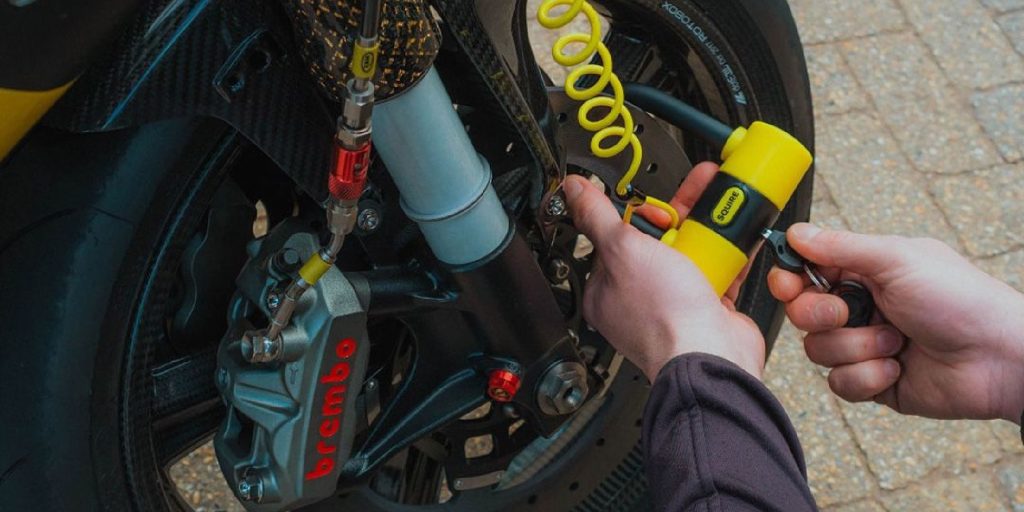
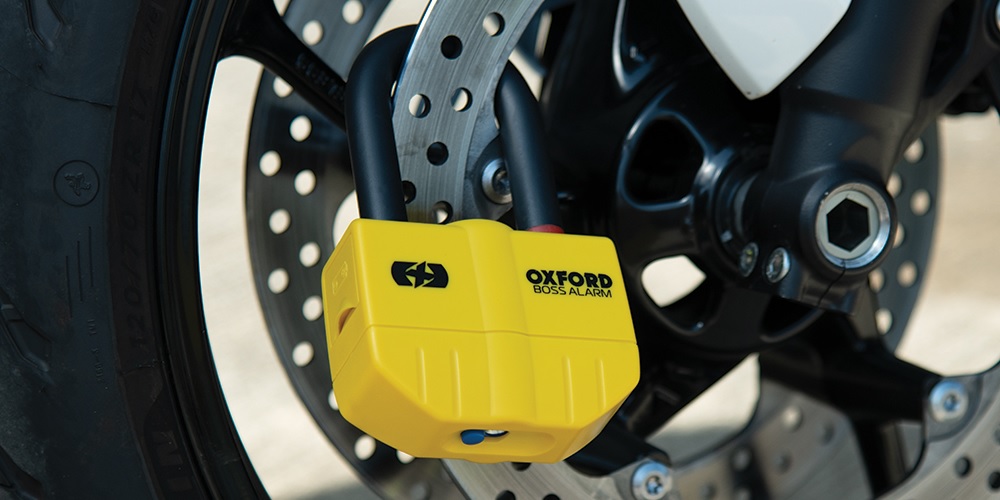
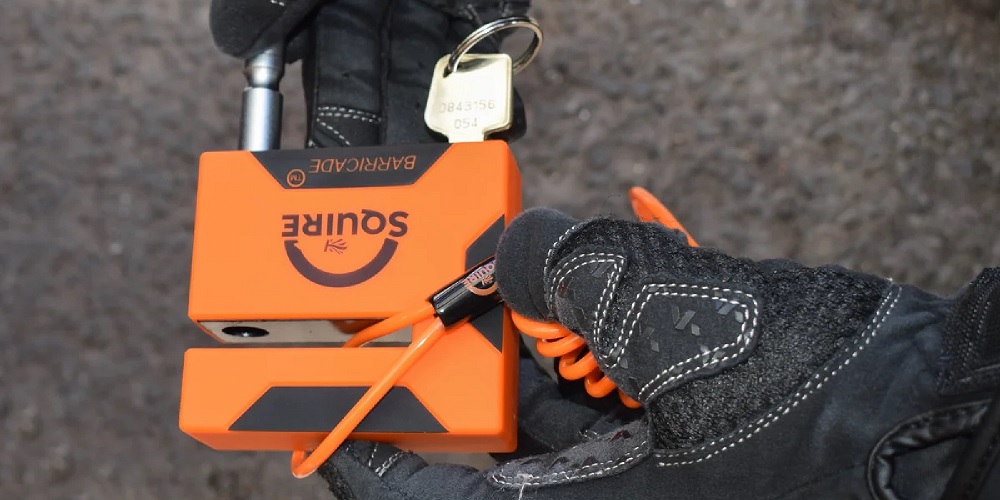
Compact and easy to carry, disc locks attach directly to your motorcycle’s brake disc to prevent the wheel from turning. While not as strong as a full chain, they’re a fantastic deterrent for opportunistic thieves and ideal for quick stops. Many models now include alarms for added protection. Motorcycle disc locks can be used anywhere, but their compact and lightweight design allows them to be an excellent choice for riders on the go, who stop at multiple locations.
U-Locks & D-Locks
Known for their rigid, lockable U-shaped design, these locks offer impressive resistance to cutting and prying tools. U-locks are often lighter than chains but still deliver high levels of security, especially when secured through the wheel or frame. Once again, we advise that U & D-locks are used on the go if you’re unable to bring a chain with you.
Lever Locks
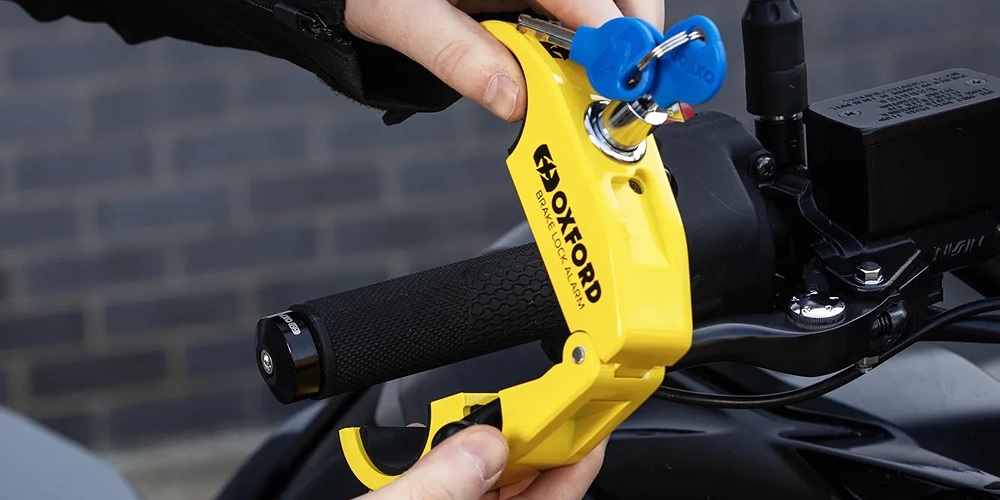
Lever locks secure the motorcycle by locking the brake lever to the handlebar, preventing the bike from being rolled or ridden away. They provide visible, fast and practical protection. Perfect for daily commuting or adding an extra layer of defence to your existing setup.
Cable Locks
Flexible and lightweight, motorbike cable locks are useful for securing helmets, luggage, or as part of a multi-lock system. However, they offer minimal resistance against bolt cutters, so they should never be used as your sole security solution. These are ideal for touring riders looking for the little extra to secure their belongings as opposed to their bike itself.
Ground/Wall Anchors
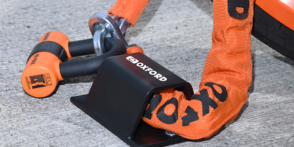
A ground or wall anchor provides a fixed point to lock your motorcycle to. This proves to be a major advantage as thieves cannot simply lift and load the bike into a van. When paired with a high quality chain, a motorbike anchor forms one of the most reliable security setups available for home garages and driveways. While you’re unable to transport these with you, many workplaces will allow you to install one of these, or have an existing anchor point, forcing the thieves to work much harder.
Alarms
Alarms add an extra layer of deterrence by drawing immediate attention when tampering is detected. From standalone disc-lock alarms to full motorcycle alarm systems with sensors and immobilisers, they can scare off thieves and reduce the time they’re willing to spend targeting your bike.
Everyone has a security set up which works best for them, and over time you’ll realise what works best for you. As always we recommend you use the best possible gear you can afford to lock up your bike, and below we’ll go through different security ratings and what they mean.
CCTV & Smart Doorbells
CCTV systems and smart doorbells such as Ring Doorbell provide a powerful visual deterrent against motorcycle theft. While the camera isn’t going to physically prevent a thief, the presence of cameras alone can discourage thieves from targeting your bike. Especially when combined with signage or security lighting.
Modern systems including the ever popular Ring Doorbell utilise motion detection, night vision as well as instant alerts to your phone. This enables you to effortlessly monitor your pride and joy in real time whether it’s parked on your driveway, in a garage or at the front of your property. Video footage can be invaluable evidence for police and insurance claims if a theft or attempted theft does occur.
Smart doorbells also allow for remote communication. While it’s not for everyone you can make any thief know that their actions are being recorded, which may be enough to stop a theft before it escalates. While CCTV won’t physically stop a determined thief, it significantly increases risk and exposure for them, making it an excellent addition to your physical home security.
GPS Trackers
GPS trackers add an extra layer of security by allowing you to monitor your motorbikes location in real time. While this doesn’t prevent theft as such, it can significantly increase your chances of retrieving your bike should it be stolen. Many modern GPS trackers also offer notifications direct to your phone whenever there is movement, vibration or unauthorised ignition. Some systems record ride history, geofencing zones, and parking locations.
While GPS tracking doesn’t prevent theft on its own, it works exceptionally well alongside physical security measures. Ultimately helping turn a theft into a recovery rather than a loss.
HOW TO DECIDE WHICH SECURITY TO USE
Fortunately, as with most gear in the motorbike world, there’s an independent body which inspects and rates security items. Whilst there are many different bodies which do this, we find the most common and helpful to be Sold Secure. Insurance companies also adopt this view, as certain insurance companies may bring your premium down if you notify them that are will use certain chains & locks which carry Sold Secure ratings of Gold and above. Do be aware however that if you fail to equip the security you quote, your insurance company may fail to pay out should your bike be stolen without protection. Below we go through Sold Secure:
Fortunately, as with most gear in the motorbike world, there’s an independent body dedicated to testing and rating motorcycle security. While several organisations exist, the most widely recognised and the one we find most useful is Sold Secure. Sold Secure is a trusted testing house that rigorously evaluates chains, locks, anchors and other security solutions against real-world attack methods. Their ratings give riders a clear indication of how well a product is expected to perform against thieves using tools such as bolt cutters, levers, drills and angle grinders.
Insurance companies also rely heavily on Sold Secure ratings. Many insurers (but not all) may reduce your premium if you use a Sold Secure Gold and above security chain or lock. This is because these solutions offer significantly higher levels of protection. However, it’s crucial to be honest about the security you actually use, if you claim a certain level of protection but fail to equip it, your insurer may refuse to pay out in the event of theft. If you’re a young and/or new rider, the premium reduction can be fairly significant. In some cases the reduction in your premium cost can even cover the cost of the chain or lock you’re looking to use.

So what goes into Sold Secure ratings? Below, we break down the Sold Secure categories and what they mean for you as a rider:
Sold Secure Rating Levels Explained
Sold Secure Bronze
Bronze-rated products offer a basic level of security and are primarily designed to deter opportunistic thieves. While they provide some protection against simple tools, they are not recommended as the main lock for your motorbike. Bronze security is more suitable for accessories, helmets or as a supplementary layer alongside a stronger lock.
Sold Secure Silver
Silver ratings represent a mid-level standard, where the solution can resist more determined attacks using moderately robust tools. Although stronger than Bronze, Silver-rated motorcycle locks may still be vulnerable to heavy-duty bolt cutters or cordless grinders. They’re often used for scooters, lightweight bikes, or as part of a multi-lock approach.
Sold Secure Gold
Gold-rated locks are tested against high-level attack methods, offering a strong degree of protection for most motorcycles. A Sold Secure Gold chain or lock can withstand substantial force and is resistant to common theft tools used by experienced criminals, including large bolt cutters. Insurance companies frequently recommend (or reward) Gold-rated products.
Sold Secure Diamond (and Motorcycle Diamond)
Diamond is the highest rating Sold Secure offers, designed specifically to withstand professional, prolonged attacks using power tools such as cordless angle grinders.
Sold Secure Diamond applies to anti-theft products in general. Sold Secure Motorcycle Diamond (SSM Diamond) is a category created specifically for motorcycle security, guaranteeing the toughest resistance available.
These products undergo tests simulating real-world grinder attacks, pry attempts and sustained tool use. Motorcycle Diamond-rated chains and locks are considered the best standard for high-value bikes, urban parking and areas with higher theft risk.
USING MOTORCYCLE COVERS AND PARKING TIPS
When we speak to the police about how we can best advise riders to keep their bike safe with general tips, the same advise is always repeated to us, cover your bike. A suitable bike cover will not only help keep your bike clean and dry, it also makes a thieves job that much harder as it’s harder for them to know which bike is under the cover, and what security is equipped. Premium motorbike covers can often come with holes designed to allow you to place your chain through the cover and your bikes wheel. It’s one of the most effective ways to keep your bike safe alongside other motorbikes, as thieves will nearly always opt for the bike with the least amount of protection, and a cover naturally moves them along.
When you’re parking your bike up at home after you’ve put it safely under cover and locked it up, there’s a number of steps you can take to add further security to it. You want as many barriers of entry as possible between your bike and the road. For example, if you’re lucky enough to have a garage, your bike should be put at the back of the garage, and behind any cars in the household. This forces the thieves to move the car first. All gates should be padlocked too, as it forces the thieves to break these to leave with your bike.
When you’re out and about it can be a little more tricky. When you have to park in the same location everyday, such as at work, you should request that a ground anchor or alternative is installed as it makes such a big difference. You’re also able to leave a second chain at work, as you won’t need to transport the chain if you opt to have two. We also recommend the same for covers.
When you’re not at work however and simply popping into the shops or going out at the weekend and park up for a coffee, you should have a look around for a suitable place to leave your bike locked up. If you’re stopping for a coffee or to take a small rest, you’ll want to have seating with your bike in view. When nipping to the shops and this isn’t possible however, always look for bike racks and other motorbike parking. Ensure that you never leave your bike without security!
WHAT TO DO IF YOUR BIKE IS STOLEN
If you’re in the unfortunate instance where your motorbike has been stolen, you want to carry out the following steps to protect yourself moving forward, and increase the chances of a recovery.
Report the Theft to the Police Immediately
You should immediately report the motorbike theft to the police the moment you discover that your bike is missing. You have a number of ways to report theft to the police in modern-day Britain. You can make the report online via your local police force website, or if you prefer you can call the non-emergency 101 phone number. You should call 999 however if the theft is currently in progress or you feel in immediate danger.
When you report the incident, make sure you have the following information ready:
- Your motorbikes registration number.
- The bikes make, model, colour and any identifying features that can help police locate the vehicle.
- The location and time the bike was last seen.
- Details of any security used.
- Provide any evidence you may have of the incident (video from your Smart Doorbell etc).
Once you’ve logged the report online or over the phone, you will be provided with a crime reference number. You will need to make a note if this is you will need this number for future communication with the police, as well as for your insurance claim.
Notify Your Insurance Provider
After you’ve notified the police, your next step is to inform your insurance company as soon as possible. Most insurers require thefts to be reported within a specific timeframe, and it’s most often with 24 hours.
You’ll typically be asked for:
- Your crime refence number.
- Details of your motorcycle and your policy.
- Information about the security fitted or used at the time of theft.
- Provide any evidence you may have of the incident (video from your Smart Doorbell etc).
Be accurate and honest about the security that was in place at the time of the theft. When you took out your policy, if you claimed that you would use a certain Sold Secure certified chain for example, and it later comes to evidence that this chain wasn’t used, it may affect your claim.
Inform DVLA (If Required)
If the motorcycle is not recovered your insurer will usually handle notifying the DVLA. However, if your bike is uninsured or you’re unsure, it’s worth confirming with the DVLA. This prevents any potential obligations you may have with ongoing tax or legal issues surrounding the bike.
CONCLUSION
While there’s no fool proof way of guaranteeing with 100% certainty to stop any and all bike theft, you can take pro-active steps to reduce the chances of it happening to you. Always ensure you have the best possible security options for your bike that you can reasonably afford. You should also trust your gut, and look to keep your bike parked up in lit areas and always be aware of your surroundings.

